
Digital Branding in 2026: The Complete Guide to Building an Unforgettable Online Identity
In an overcrowded online marketplace, simply having a great product or service isn’t enough to guarantee success. Every single day, your potential customers are bombarded with hundreds of marketing messages, social ads, and promotional emails. So, how do you stand out above the noise?
The answer lies in digital branding.
Digital branding isn’t just about putting a pretty logo on your website or picking out a nice color scheme. It’s about creating a living, breathing identity across every digital touchpoint—from your website layout and social media presence to your email campaigns and customer service interactions.
In this comprehensive guide, we’ll break down what digital branding really means, why your business desperately needs a cohesive online identity, and how you can build a digital brand that earns trust, commands attention, and drives predictable, long-term revenue.
Part I: The Anatomy of Modern Digital Branding
Most business owners mistake branding for graphic design. While a logo and color palette set the visual tone, digital branding encompasses every digital interaction a customer has with your business.
It is the intersection of three fundamental pillars:
- Visual Identity: Logos, typography, color hierarchy, and design assets optimized for dark/light modes and responsive screens.
- Brand Voice & Narrative: The tone, messaging, and storytelling style used across blog articles, email copy, and social captions.
- Interactive User Experience (UX): Site speed, mobile layout fluidity, navigation simplicity, and checkout ease.
When these three components work together seamlessly, your company transitions from a generic vendor into a recognized industry leader.
Part II: The Psychology of Online Trust and Perception
Why do users instantly bounce from some websites while spending hours exploring others? The secret lies in cognitive friction and digital trust psychology.
When a prospective client lands on your website via a search result or social link, their brain subconsciously evaluates your credibility within milliseconds. They look at typography alignment, button responsiveness, clarity of message, and visual harmony. If your digital touchpoints feel disjointed, unprofessional, or outdated, trust evaporates instantly.
True digital branding removes friction by creating a seamless, predictable, and reassuring environment. When a customer sees the same polished color palettes, clear messaging tone, and professional imagery across your website, Instagram feed, and email newsletter, their psychological guard drops. They feel secure knowing they are dealing with an established authority, which drastically accelerates their decision to buy or inquire.
Part III: The 4-Step Digital Branding Framework
Building a sustainable online identity requires a structured execution model. Follow this four-step blueprint to establish your digital presence:
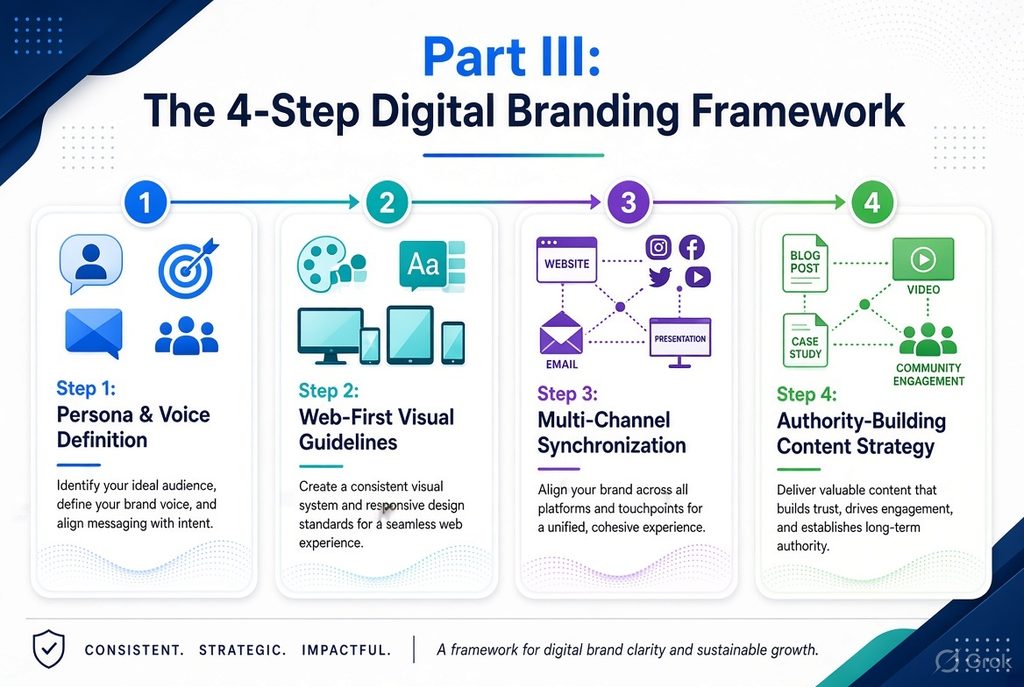
1. Persona & Voice Definition
- Identify the exact pain points, desires, and online habits of your target buyer.
- Establish a distinct tone of voice (e.g., authoritative, conversational, concise) and document strict do’s and don’ts for written copy.
2. Web-First Visual Guidelines
- Build a flexible design system with high-contrast color palettes, web-safe typography, and responsive logo variations.
- Ensure all visual elements adhere to digital accessibility standards (WCAG) so every user enjoys a smooth browsing experience.
3. Multi-Channel Synchronization
- Apply your updated digital branding guidelines across your website, social media profile banners, email templates, and digital sales decks.
- Maintain consistent messaging so a user moving from an Instagram post to your web page feels a continuous brand experience.
4. Authority-Building Content Strategy
- Publish educational blog content, case studies, and video walkthroughs that solve specific customer problems.
- Position your team as accessible experts through active social engagement and community discussions.
Part IV: Essential Digital Branding Implementation Checklist
Before launching your next digital marketing or website redesign project, use this quick checklist to ensure your brand foundation is solid:
- [ ] Favicons & Mobile Icons: Are your visual marks crisp and clear at 16×16 pixels on mobile screens?
- [ ] Cross-Device Consistency: Do your brand colors and fonts look identical across iOS, Android, macOS, and Windows browsers?
- [ ] Value Proposition Clarity: Can a first-time web visitor understand what your business does within five seconds of landing on your homepage?
- [ ] Unified Social Banners: Are all active social media channels using current, high-resolution header graphics and matching bio descriptions?
- [ ] Core Email Templates: Do your transactional and marketing emails match the look and feel of your primary website layout?
Strategic Takeaway
Investing in a cohesive digital branding strategy transforms your online presence from a simple digital brochure into a predictable engine for long-term customer trust and revenue growth. When your design, messaging, and performance align, your brand naturally attracts high-value clients and stands out in any competitive market.